

The EVA (ethylene-vinyl acetate) injection molding process is a widely adopted manufacturing technique known for its versatility and efficiency. It plays a critical role across industries such as footwear, automotive, electronics, and toys, enabling the mass production of high-quality, durable products.
What is EVA Injection Molding Process
The eva injection molding process begins with blending EVA resin pellets with specific additives, including foaming agents and crosslinking agents, to tailor the material’s properties for different applications. This compound is then melted in a heated barrel until it becomes flowable. Under high pressure, the molten EVA is injected into a mold cavity, where it takes on the desired shape. Once cooled and solidified, the product is released from the mold. Depending on the design requirements, additional post-processing steps such as trimming, secondary heating and/or compression may be performed to refine the product’s surface finish and physical properties.

The EVA Injection Molding Explanation Videos
Key Advantages of EVA Injection Molding
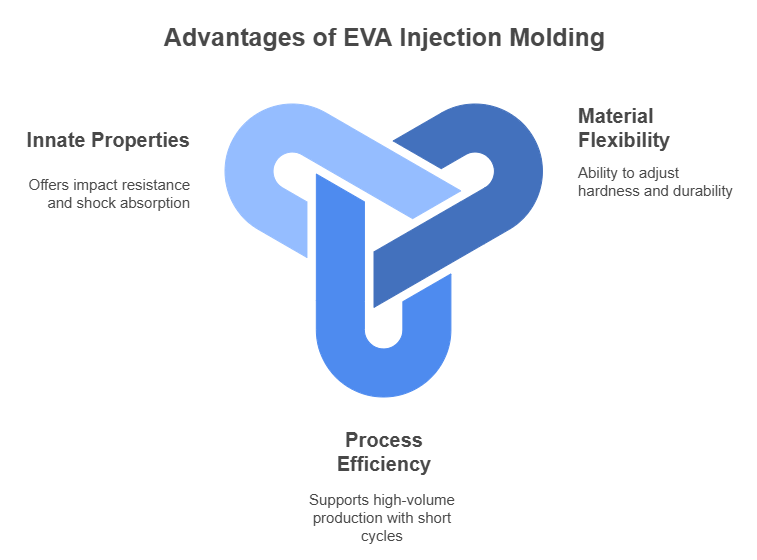
Material Flexibility
One of the primary strengths of the EVA injection molding process is the material property tuning. By adjusting the formulation and process, manufacturers can produce components with varying levels of hardness, flexibility, and durability. This makes the process suitable for a broad range of applications—from soft, cushioned shoe midsoles to sturdy automotive parts.
High Production Efficiency
Another significant advantage is the process’s efficiency. EVA injection molding supports high-volume production with consistent quality, thanks to its short, automated molding cycles. Compared to traditional methods like vulcanized pressing, it is also more energy-efficient, aligning with modern sustainability goals.
Enhanced Product Properties
Additionally, EVA’s innate properties such as impact resistance, shock absorption, and lightweight composition enhance product functionality. These features are especially beneficial in applications where comfort, safety, or weight reduction are critical.
EVA Injection Molding Application Across Industries
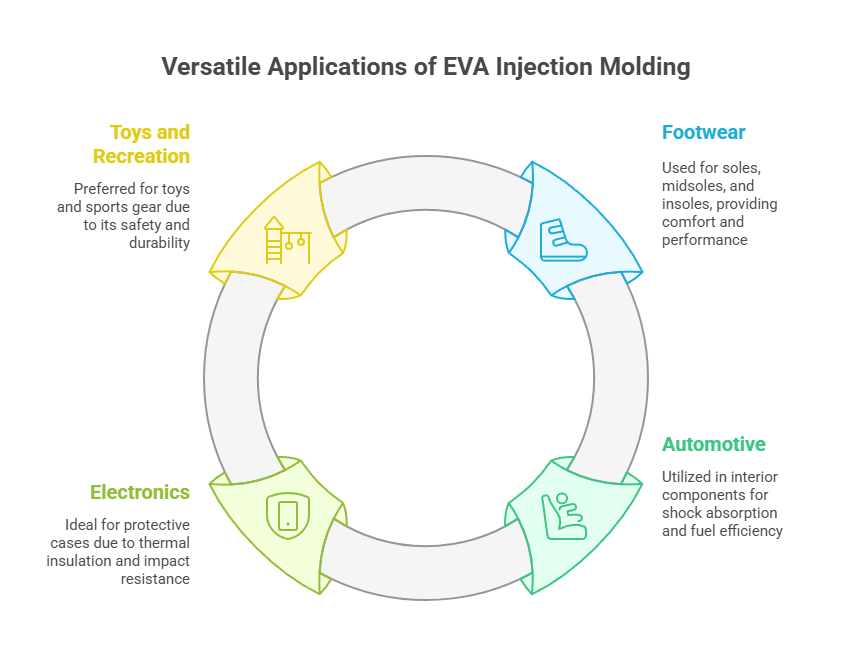
Footwear
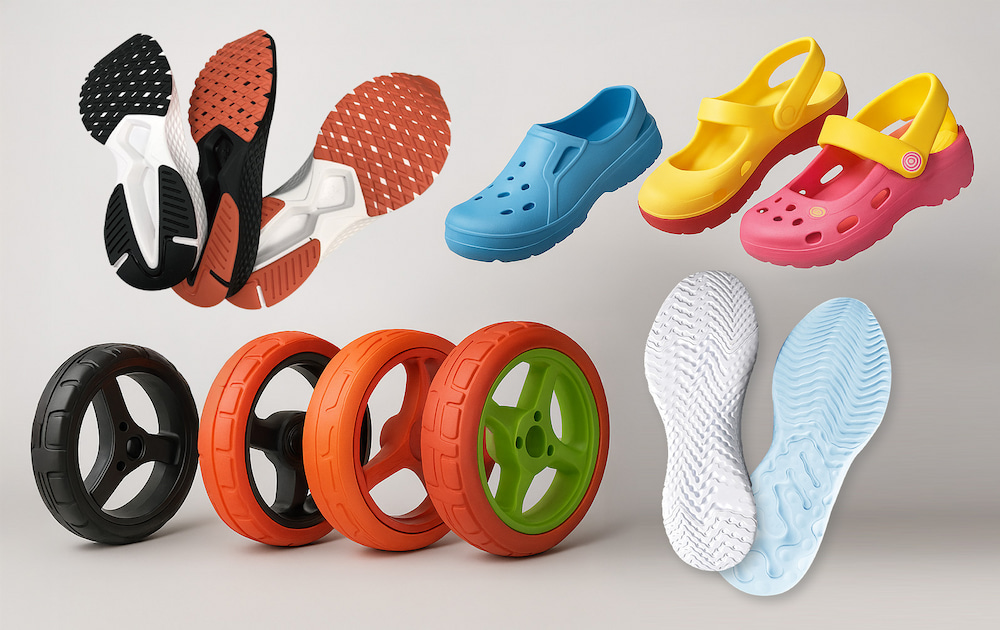
EVA injection molding is extensively used for manufacturing. The material’s cushioning and flexibility provide both comfort and performance, especially in athletic and casual footwear.
Automotive
In vehicles, EVA is utilized for interior components such as armrests and headrests. Its shock-absorbing and vibration-dampening properties improve passenger comfort, while its light weight contributes to better fuel efficiency.
Electronics
EVA’s thermal insulation and impact resistance make it ideal for protective cases, covers, and housings, safeguarding sensitive electronic components.
Toys and Recreation
EVA’s soft, non-toxic, and cushioned nature makes it a preferred material for children’s toys, play mats, and sports gear, offering both safety and durability.
Moreover, the ability to customize the foam ratio and hardness allows manufacturers to meet highly specific product requirements across these diverse sectors.
Conclusion
The EVA injection molding process stands out as a cost-effective, eco-friendly, and scalable manufacturing solution. Its adaptability in material properties, combined with fast production cycles and energy efficiency, makes it a cornerstone technology in modern manufacturing. For businesses looking to deliver high-performance, customized products across various markets, EVA injection molding continues to be an essential and forward-thinking choice.
Dive deeper into EVA injection molding machine applications, materials, and solutions here:
https://www.tienkang.com/products_category/eva