
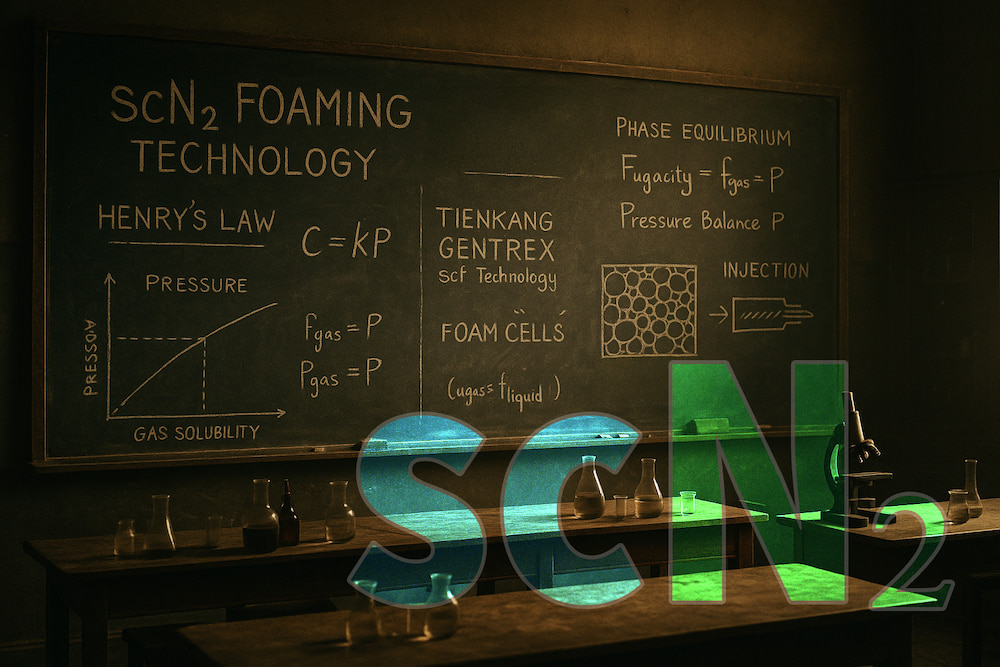
Supercritical Fluids: From Scientific Curiosity to the Future of Footwear
Supercritical fluids (SCFs) occupy a fascinating phase of matter — not quite a gas, not quite a liquid, but with properties of both. Their unique characteristics have captivated scientists and engineers for nearly two centuries, evolving from a scientific anomaly into a powerful tool across industries — and now, surprisingly, into your sneakers.
Origins: The Birth of a Supercritical Concept
The concept of a supercritical fluid dates back to 1822, when French scientist Baron Charles Cagniard de la Tour conducted pioneering experiments. While experimenting with sealed gun barrels filled with liquids, he noticed that beyond a certain temperature and pressure, the distinction between liquid and gas disappeared. He was the first to observe the “critical point” — the threshold at which a substance becomes a supercritical fluid.
This discovery was largely academic for decades. The thermodynamic behavior was intriguing, but practical applications wouldn’t emerge until industrial science caught up in the 20th century.
Industrial Evolution: From Labs to Large-Scale Applications
By the 1970s and 80s, supercritical fluids, particularly supercritical CO₂ (scCO₂), became recognized for their ability to act as green solvents with tunable properties. These fluids can diffuse through solids like a gas, yet dissolve materials like a liquid — a rare and valuable combination.
Some landmark uses include:
- Decaffeination of coffee: scCO₂ is used to extract caffeine without using harsh solvents, preserving flavor while staying eco-friendly.
- Extraction of essential oils and pharmaceuticals: SCFs offer clean, residue-free extraction methods ideal for food and medicine.
- Polymer processing: scCO₂ acts as a plasticizer, allowing for more efficient molding and foaming processes.
- Eco-friendly garment cleaning: In the early 2000s, scCO₂ was explored as a sustainable alternative to dry cleaning. Companies developed machines that use pressurized CO₂ instead of perchloroethylene (a common but toxic solvent), effectively cleaning clothes without water or hazardous chemicals. Though adoption has been limited due to cost and infrastructure, it showcased SCF’s potential in consumer-facing technologies.
These applications were mostly limited to chemical, textile, and food processing industries, where high-pressure systems are standard.
The New Frontier: Supercritical Foaming in Footwear
Recently, SCFs have stepped, quite literally, into the world of athletic and lifestyle footwear.
In particular, supercritical foaming using N₂ (scN₂) has revolutionized how midsoles are made. Traditional EVA and PU foams rely on chemical blowing agents, which can be environmentally taxing and less controlled.
Enter supercritical foaming:
- Process: A polymer is saturated with scN₂ under high pressure and temperature, then rapidly depressurized. This creates microcellular foams with consistent, tunable density.
- Benefits: Lightweight, highly resilient, and more sustainable than traditional methods.
Brands like Nike (with ZoomX) and On Running (with Helion Superfoam) have already adopted variations of supercritical foamed materials in their performance footwear. The process allows for precise control over cushioning, rebound, and weight which are all critical for competitive footwear.
Why It Matters
The adoption of supercritical fluid technology in footwear marks a broader shift in materials science, one where sustainability, performance, and innovation converge. What began in a 19th-century lab with sealed gun barrels has evolved into technologies that help athletes run faster and jump higher, while being kinder to the environment.
This is just the beginning. As supercritical technology becomes more cost-effective and scalable, expect to see it pop up not just underfoot, but across wearables, packaging, garment care, and advanced composites.
Conclusion
From obscure thermodynamic phenomenon to a cornerstone of green manufacturing and high-performance products, supercritical fluids are a testament to how deep science can find its way into everyday life, from your morning coffee to your workout gear, and even how you wash your clothes.
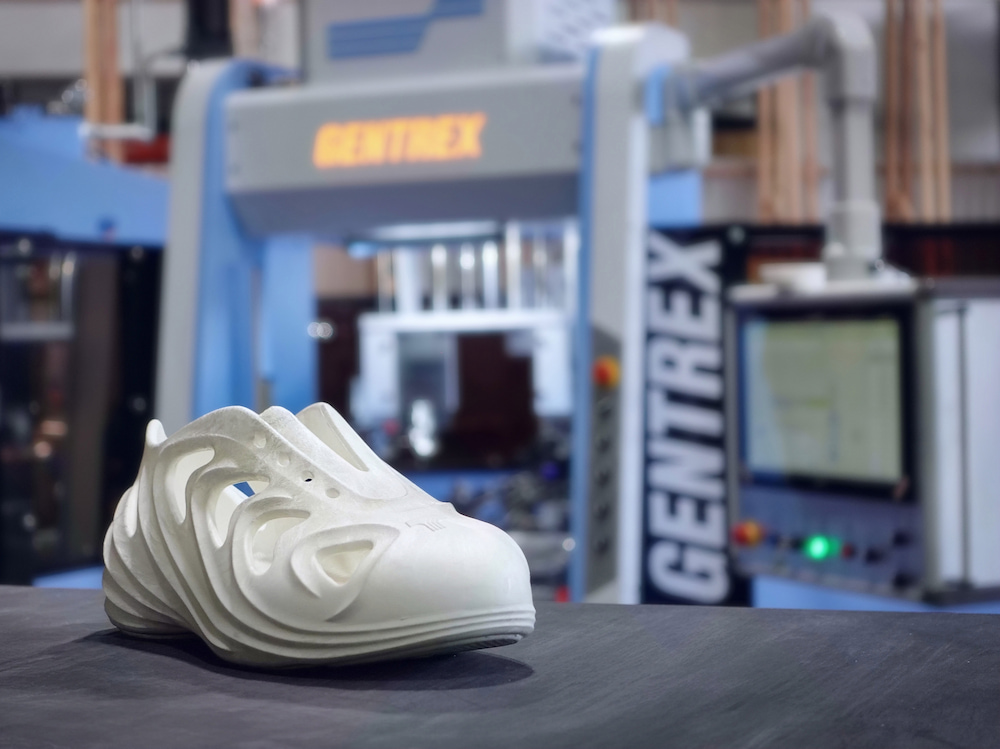
More information: Supercritical fluid injection -GENTREX