
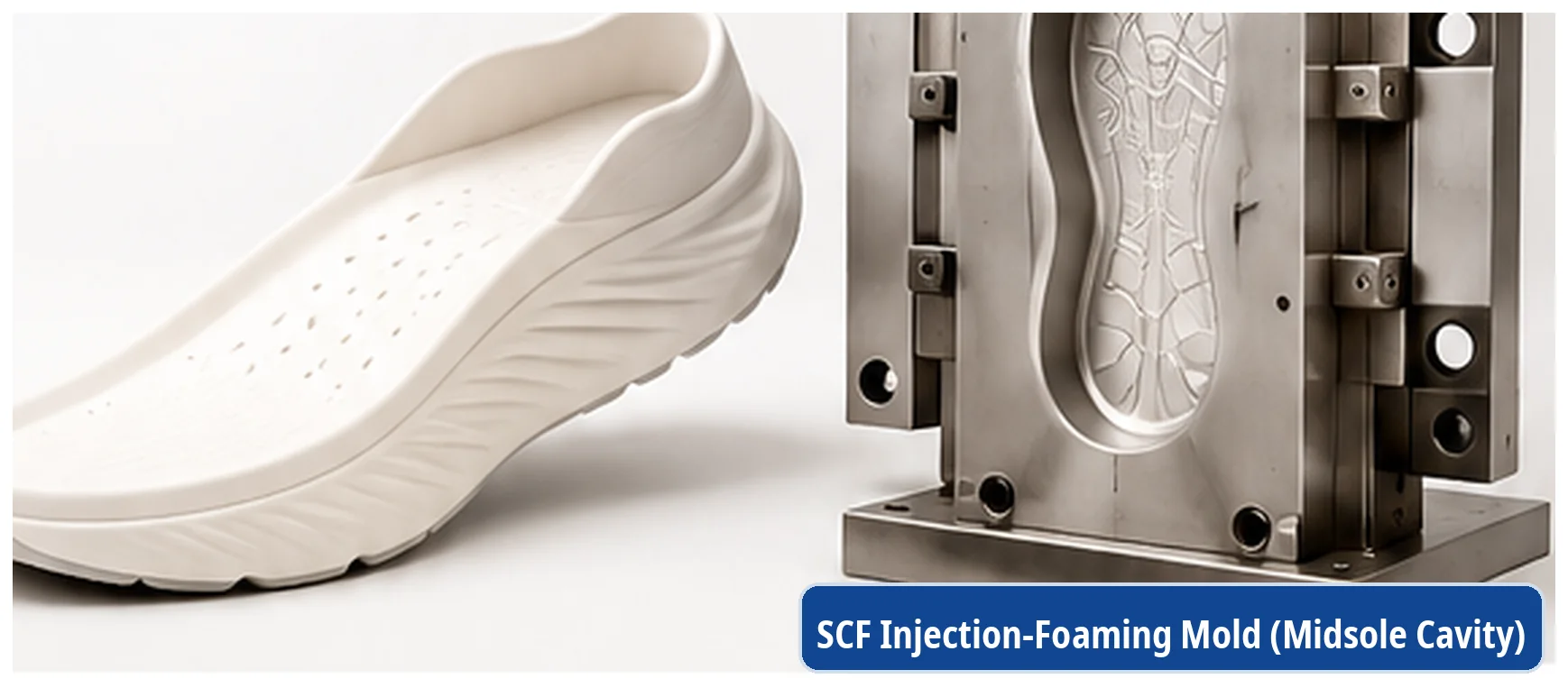
Introduction
Differential scanning calorimetry, commonly called DSC, is one of the most useful analytical tools for evaluating polymers used in SCF injection foaming. In SCF injection, thermal behavior affects how a polymer melts, dissolves nitrogen, flows into the mold, nucleates cells, expands, forms a skin, crystallizes, stabilizes, and retains its final shape after demolding.
DSC does not directly predict whether a material will foam well. It does not measure nitrogen solubility, nitrogen diffusion, melt strength, extensional viscosity, nucleation density, or final cell morphology. However, it provides critical thermal evidence that helps engineers understand why one material may process consistently while another shows shrinkage, surface striations, unstable density, poor compression set, or a narrow production window.
For footwear midsoles and cushioning components, DSC should be viewed as a thermal map. It helps identify where a material becomes processable, when it crystallizes or solidifies, how much structure develops during cooling, and whether prior processing history affects part quality.
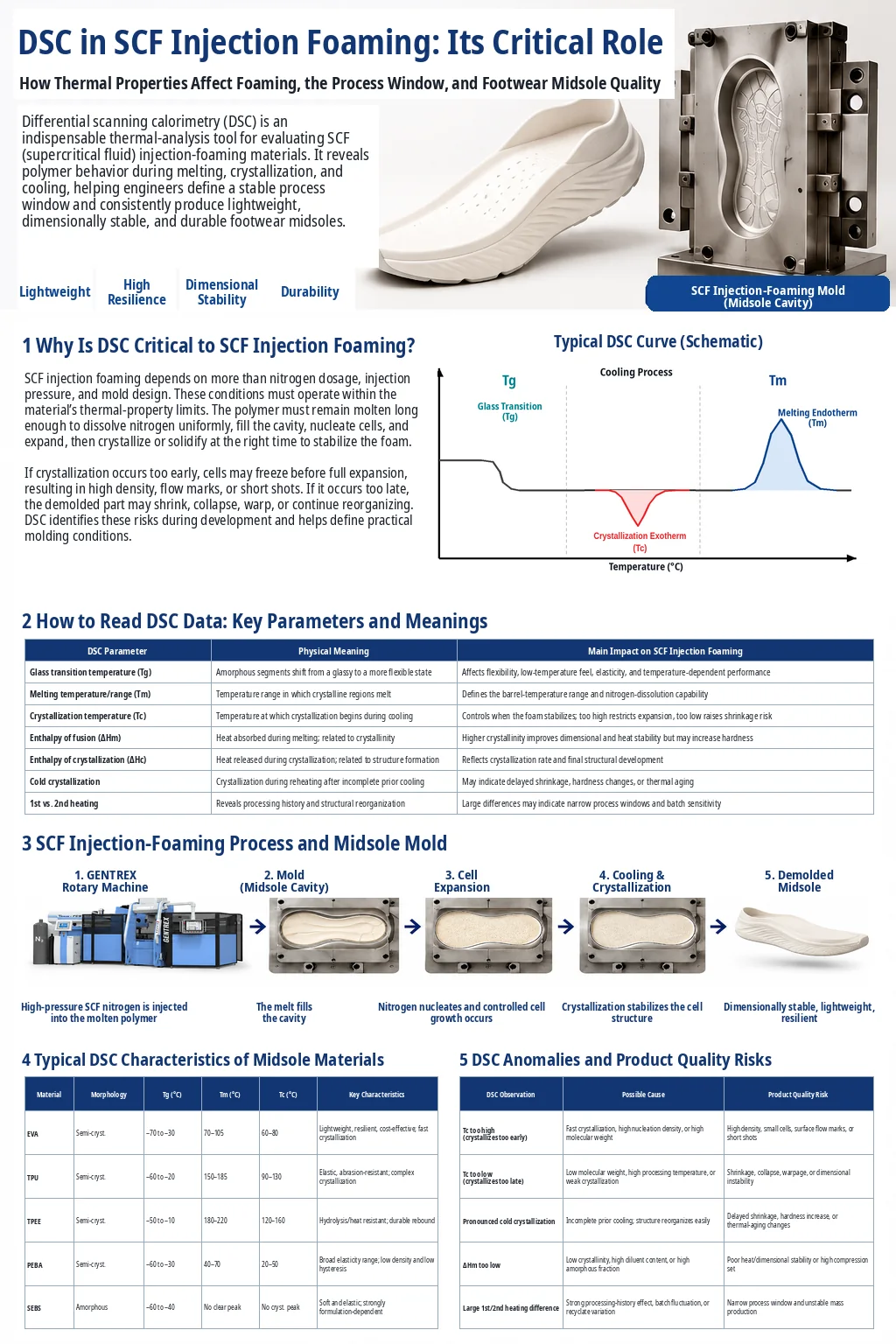
Figure 1 Integrated Overview of DSC Analysis, SCF Injection Foaming, and Footwear Midsole Quality
Why DSC Matters in SCF Injection Foaming
SCF injection foaming is controlled by more than gas dosage, injection pressure, and mold design. Those variables operate inside the thermal limits of the polymer. The material must remain molten long enough to dissolve supercritical nitrogen, fill the mold, nucleate cells, and allow controlled expansion. At the same time, it must crystallize or solidify quickly enough to stabilize the foam before demolding.
| This balance defines the practical processing window. |
|---|
If crystallization occurs too early, the foam may freeze before full expansion, resulting in higher density, restricted cell growth, surface striations, or incomplete filling. If crystallization occurs too late, the foam may shrink, collapse, deform, or continue reorganizing after demolding. If thermal behavior changes from lot to lot, the same processing conditions may produce different part quality.
DSC helps engineers understand these risks before and during material development.
What DSC Measures
DSC measures how much heat a polymer absorbs or releases as it is heated and cooled. For SCF injection foaming, the most useful DSC outputs are glass transition temperature, melting behavior, crystallization behavior, melting enthalpy, crystallization enthalpy, cold crystallization, and differences between first heating, cooling, and second heating scans.
The glass transition temperature, Tg, describes where amorphous polymer segments transition from a hard, glassy condition to a softer, more mobile state. Tg is especially relevant for soft segments in TPU, aTPU, TPEE, PEBA, and SEBS systems because it influences flexibility, low-temperature feel, elasticity, and temperature-dependent performance.
The melting temperature, Tm, describes where crystalline regions melt during heating. For semi-crystalline materials such as EVA, TPEE, PEBA, and some TPU systems, melting behavior helps define the temperature range needed for stable barrel processing and nitrogen dissolution. However, Tm should not be treated as one exact processing temperature. Commercial footwear compounds often show broad melting ranges, multiple melting peaks, or complex transitions because they may contain copolymers, blends, fillers, additives, pigments, or recycled content.
The crystallization temperature, Tc, is often one of the most important DSC values for SCF injection foaming. Tc shows where the polymer begins to crystallize during cooling. This matters because crystallization helps stabilize the foam structure. If crystallization happens too early, expansion may be restricted. If it happens too late, the part may shrink, collapse, or deform after demolding.
Melting enthalpy and crystallization enthalpy help estimate relative crystalline content and structure formation. Higher crystallinity can improve dimensional stability, heat resistance, and compression recovery, but it may also increase stiffness, reduce softness, or narrow the foaming window. In footwear foams, the goal is not maximum crystallinity. The goal is the right balance of softness, rebound, compression set, durability, dimensional stability, and process robustness.
Cold crystallization occurs when a polymer crystallizes during heating because it did not fully crystallize during prior cooling. In SCF injection foams, cold crystallization can indicate that the material may continue reorganizing after molding, which can contribute to delayed shrinkage, dimensional drift, hardness change, or heat-aging effects.
How to Read a DSC Curve for SCF Injection Foaming
For SCF injection, the practical goal of reading a DSC curve is simple: determine when the polymer softens, melts, crystallizes, reorganizes, and stabilizes.
Melting is endothermic, meaning the polymer absorbs heat as crystalline structure is disrupted. Crystallization is exothermic, meaning the polymer releases heat as ordered structure forms. Glass transition appears as a baseline shift rather than a sharp peak.
A sharp melting peak usually indicates a more defined melting transition. A broad melting peak suggests a wider range of structures, complex morphology, copolymer effects, or multiple crystalline populations. Multiple melting peaks can indicate different crystalline phases, phase separation, recrystallization during heating, or prior thermal history.
The cooling scan is especially important for SCF injection because foam quality depends heavily on what happens as the polymer cools in the mold. A high crystallization temperature means the material crystallizes earlier during cooling. A low crystallization temperature means the material remains mobile longer. A sharp crystallization peak may indicate rapid crystallization and a narrower process window, while a broad peak may indicate slower or more distributed stabilization.
First heating, cooling, and second heating should be interpreted separately. First heating shows the material as received or as molded, including prior thermal history. Cooling shows crystallization behavior under controlled test conditions. Second heating shows the material after prior thermal history has been largely erased. Together, these scans help separate material chemistry from processing history.
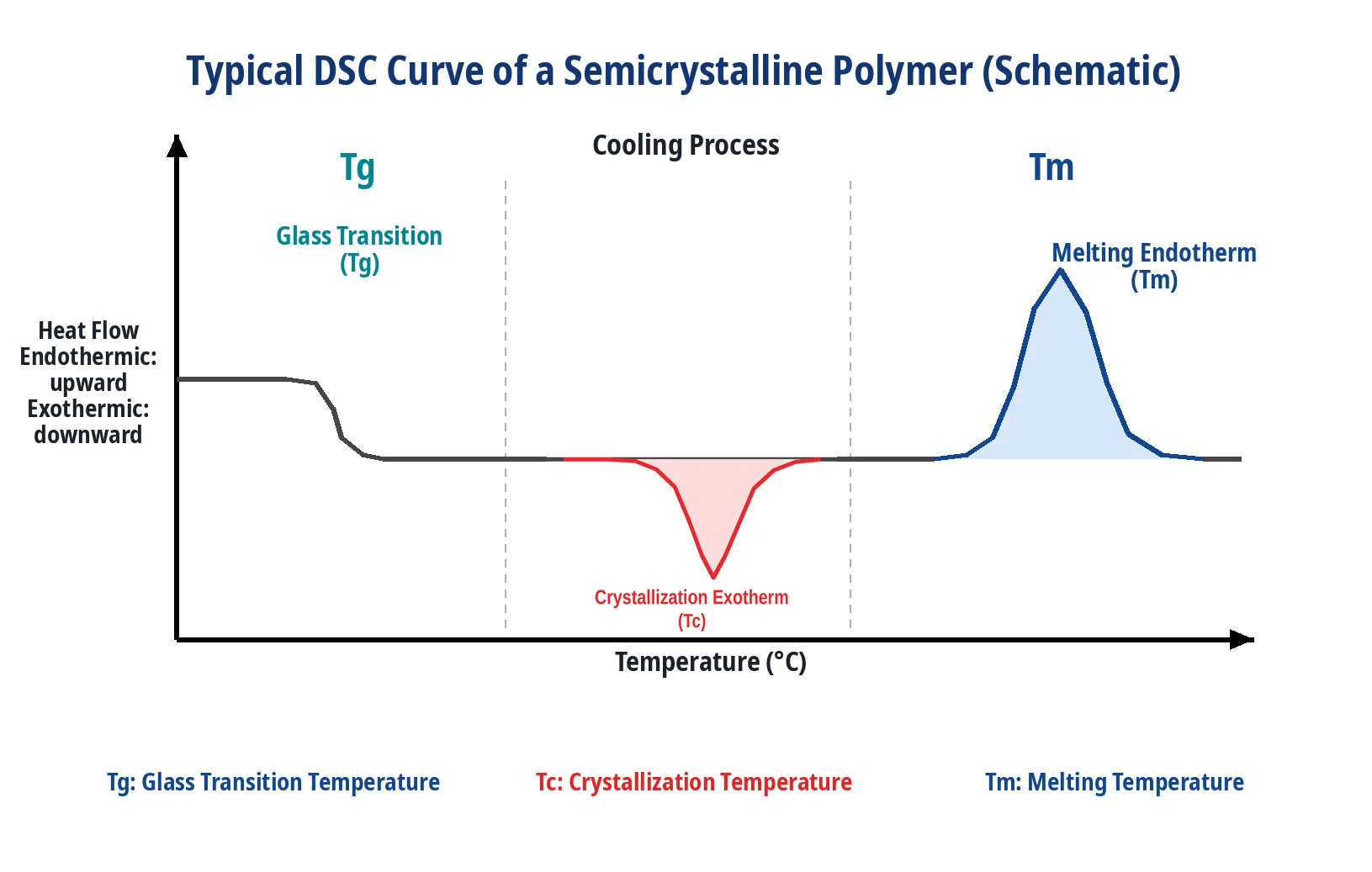
Figure 2 Typical DSC Curve of a Semicrystalline Polymer: Locations of Tg, Tc, and Tm
How Thermal Properties Affect Foaming Behavior
The polymer must be fully processable in the barrel before SCF injection can occur consistently. If the material is not sufficiently melted, viscosity may remain too high, nitrogen dissolution may be uneven, and flow through the injection system may become unstable. However, excessive melt temperature is also risky because it can reduce melt strength, promote cell coalescence, increase shrinkage, or accelerate degradation.
Crystallization behavior controls foam stabilization. During SCF injection, nitrogen nucleation and cell growth occur as pressure decreases. At the same time, the polymer is cooling against the mold. Ideally, the material remains mobile long enough to expand, but develops enough structure to stabilize the cells before demolding.
Fast crystallization can improve dimensional stability, but it may restrict expansion and increase sensitivity to mold temperature. Slow crystallization can allow more complete expansion, but it may increase shrinkage or demold deformation. Neither is automatically better. The correct behavior depends on polymer chemistry, density target, mold temperature, part thickness, and cycle time.
| This is why DSC is most valuable when interpreted as part of a broader process-development program. It does not replace molding trials, but it helps engineers understand what the molding trials mean. |
|---|
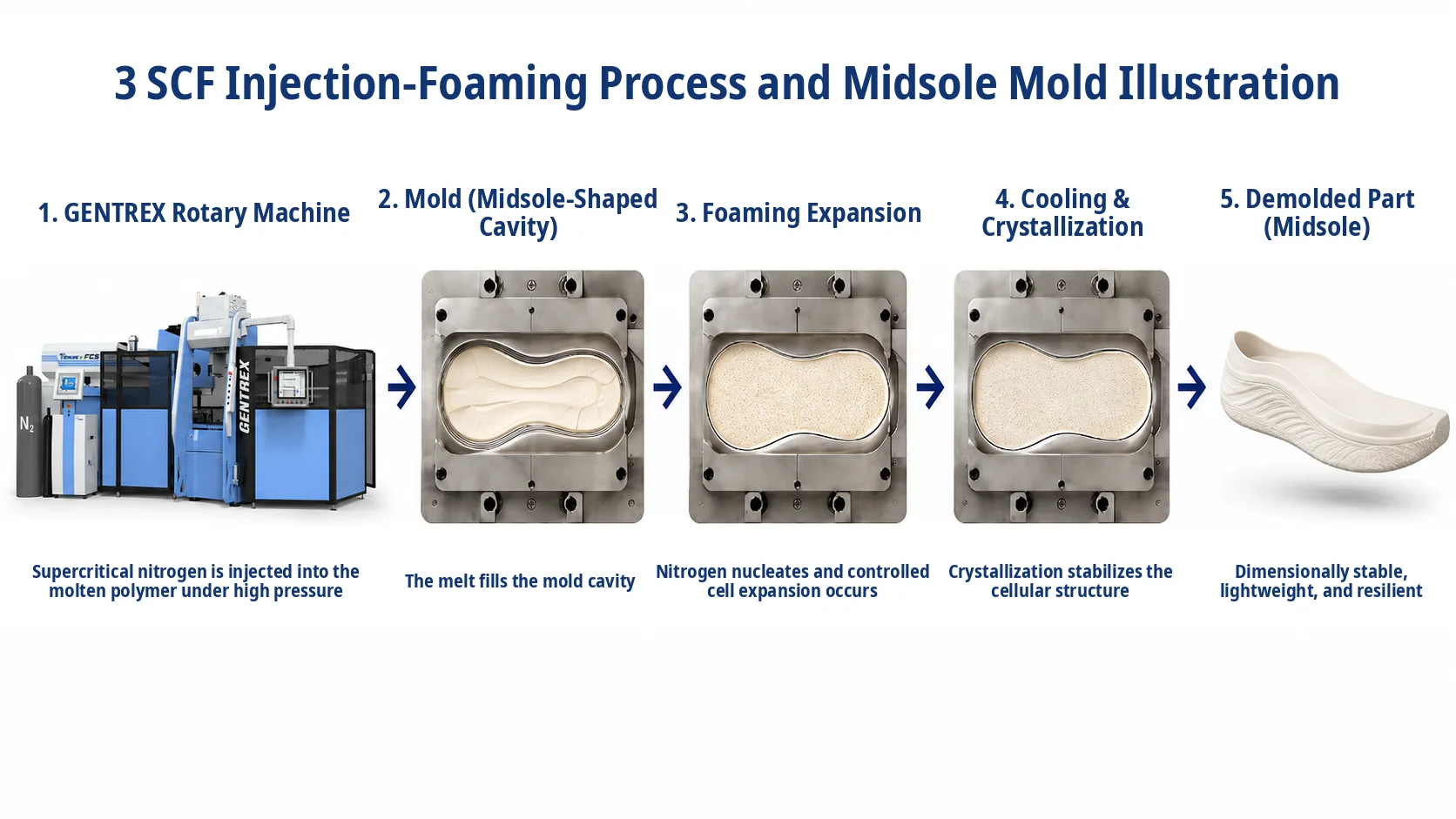
Figure 3 SCF Injection-Foaming Process and Midsole-Shaped Mold Cavity
DSC and the SCF Injection Processing Window
The SCF injection processing window is the range of conditions where the material can produce stable, repeatable foam quality. DSC helps define that window by showing where the polymer melts, when it crystallizes, how strongly it crystallizes, and whether prior thermal history affects the molded part.
For barrel temperature selection, DSC helps identify the melting or softening range. The barrel must be hot enough for stable flow and nitrogen dissolution, but not so hot that melt strength, cell stability, or residence stability are compromised.
For mold temperature strategy, DSC helps connect crystallization behavior to skin formation, surface appearance, cooling time, and demold stability. A mold that is too cold may cause premature skin formation, surface striations, or restricted expansion. A mold that is too hot may increase cycle time, shrinkage, sticking, or deformation.
For cooling time and demolding, DSC helps explain whether the foam structure has enough time to stabilize before the part leaves the mold. Materials with delayed crystallization may require longer cooling or adjusted mold temperature. Materials with rapid crystallization may demold faster, but may be more sensitive to surface appearance defects.
A wide processing window means normal production variation can occur without major changes in part quality. A narrow processing window means small changes in melt temperature, mold temperature, cooling, nitrogen dosage, or material lot can produce visible or mechanical defects.
DSC and Part Quality
DSC connects directly to several practical part-quality issues in SCF injection foam.
Cell structure: DSC does not measure cell size or cell uniformity, but crystallization behavior helps explain whether the polymer stabilizes the foam at the correct time. Early stabilization can restrict expansion. Late stabilization can allow cell coalescence, collapse, or shrinkage.
Density uniformity: Thermal gradients across the mold can cause local differences in crystallization timing. This can contribute to density variation between different regions of a part or between mold cavities.
Shrinkage and dimensional stability: Delayed crystallization, weak crystallization, cold crystallization, or strong thermal-history effects can all contribute to post-mold shrinkage or dimensional drift.
Compression set and rebound: DSC does not measure compression set or rebound directly, but it can help explain the crystalline or hard-segment structures that support elastic recovery. This is especially relevant for TPEE, PEBA, TPU, and aTPU systems.
Surface striations and flow marks: Surface appearance is strongly affected by skin formation, crystallization, cooling, and flow. If a polymer crystallizes quickly near the mold wall, it may form a skin before filling and foam stabilization are complete. This can contribute to gloss variation, striations, or visible flow-directional patterns.
Heat aging: DSC can help identify unstable or partially developed structure that may continue changing during storage, shipping, bonding, or use at elevated temperature.
Material-by-Material DSC Interpretation
DSC interpretation depends heavily on polymer family.
EVA: DSC helps evaluate melting behavior, crystallization behavior, vinyl acetate effects, shrinkage risk, surface appearance, and dimensional stability. In SCF injection, EVA is processed as a thermoplastic without chemical blowing agents or crosslinking during foaming, so melt behavior and crystallization become especially important.
TPEE: DSC is highly useful because TPEE performance depends strongly on hard-segment crystallization. Crystallization behavior affects foam stabilization, rebound, compression set, heat resistance, and processing sensitivity.
TPU and aTPU: TPU systems can show broad or complex DSC transitions because their morphology depends on soft segments, hard segments, phase separation, hydrogen bonding, chemistry, and thermal history. DSC is useful, but it must be paired with rheology, moisture control, melt strength evaluation, and molded foam trials.
PEBA: DSC helps evaluate polyamide hard-segment melting and crystallization. PEBA can offer strong lightweight performance potential, but the thermal transitions must align with injection, foaming, cooling, and demolding to create a practical SCF injection window.
SEBS: SEBS is largely amorphous, so DSC is less central for crystallization analysis. Tg, softening behavior, rheology, melt strength, oil content, styrene content, and formulation architecture may be more important than crystallization peaks.
Crosslinked EVA: Traditional chemically foamed EVA behaves differently because the polymer network is chemically locked. DSC data from crosslinked EVA should not be directly transferred to thermoplastic SCF injection without considering the different process architecture.
Troubleshooting Table: DSC Observations and SCF Injection Meaning
| DSC Observation | Possible SCF Injection Meaning | What to Check |
|---|---|---|
| Broad melting range | Complex morphology, blends, copolymers, or multiple crystalline populations | Barrel temperature, residence time, lot consistency |
| Multiple melting peaks | Multiple phases, crystal populations, or thermal-history effects | Formulation, processing history, lot variation |
| High crystallization temperature | Early crystallization during cooling | Premature skin formation, restricted expansion, striations |
| Low crystallization temperature | Delayed stabilization | Shrinkage, collapse, longer cooling time |
| Sharp crystallization peak | Rapid crystallization over a narrow range | Mold-temperature sensitivity, cavity variation |
| Broad crystallization peak | Slow or distributed crystallization | Cooling time, post-mold shrinkage |
| Weak crystallization peak | Limited structure formation | Dimensional stability, compression set |
| Cold crystallization | Incomplete crystallization during prior cooling | Post-mold shrinkage, heat-aging changes |
| First heat differs from second heat | Strong prior thermal-history effect | Processing history, startup stability, molded-part aging |
| Crystallization peak shifts between lots | Lot-to-lot thermal variation | Production consistency, density, shrinkage, surface appearance |
This table should guide troubleshooting, not replace molded-part testing. DSC observations indicate possible mechanisms, but confirmation requires density testing, microscopy, dimensional checks, compression set, rebound, and production trials.
What DSC Cannot Tell You
DSC is powerful, but it is not a complete foamability test. DSC does not directly measure nitrogen solubility, nitrogen diffusivity, melt strength, extensional viscosity, nucleation density, final cell size, density distribution, long-term durability, or real production stability.
A material may have favorable DSC behavior but still foam poorly if gas dissolution, rheology, melt strength, mold design, or processing conditions are unsuitable. For this reason, DSC should be paired with rheology, molded trials, density measurement, microscopy, compression set testing, rebound testing, cyclic compression, dimensional stability checks, and production repeatability data.
Used correctly, DSC helps engineers understand the thermal dimension of the problem. It does not replace the rest of the engineering work.
Common Mistakes in DSC Interpretation
The most common mistake is treating Tm as a single processing temperature. In commercial footwear materials, melting often occurs over a range, not at one exact point.
Another mistake is focusing only on melting behavior while ignoring crystallization. For SCF injection, crystallization during cooling may be more important because it determines when the foam stabilizes.
Engineers should also avoid comparing DSC curves run under different heating or cooling rates, assuming higher crystallinity is always better, assuming DSC alone predicts foamability, or ignoring the difference between first heating and second heating.
| The best use of DSC is to form better engineering hypotheses, not to skip validation. |
|---|
Frequently Asked Questions
What is DSC analysis used for in SCF injection foaming?
DSC analysis is used to understand how a polymer melts, crystallizes, stores thermal history, and stabilizes during cooling. This helps engineers evaluate material suitability, processing window, shrinkage risk, surface appearance sensitivity, and part-quality issues.
Can DSC predict whether a material will foam well?
No. DSC cannot directly predict foamability because it does not measure nitrogen solubility, nitrogen diffusivity, melt strength, nucleation density, or final cell morphology. It helps explain whether the polymer’s thermal behavior supports stable foaming.
Why is crystallization temperature important?
Crystallization temperature helps determine when the foam begins to stabilize. If crystallization occurs too early, expansion may be restricted. If it occurs too late, the part may shrink, collapse, or deform after demolding.
Can DSC explain surface striations or flow marks?
DSC can help explain why a material may be sensitive to surface striations, especially if crystallization occurs quickly or is highly sensitive to cooling conditions. It does not directly predict flow marks, but it helps identify whether crystallization behavior may be contributing to the issue.
Does higher crystallinity improve foam quality?
Sometimes, but not always. Higher crystallinity can improve dimensional stability and compression recovery, but it can also increase stiffness, reduce softness, restrict expansion, or narrow the processing window.
Conclusion
DSC analysis is not a standalone foamability test. It is a thermal map that helps engineers understand how a polymer melts, crystallizes, reorganizes, and stabilizes during SCF injection foaming. When interpreted correctly, DSC helps explain foaming behavior, processing-window sensitivity, shrinkage, surface appearance, compression set, rebound, and production repeatability.
The most effective use of DSC is not to search for a single ideal melting point or crystallization temperature. It is to compare thermal behavior across materials, lots, molded parts, and process conditions. First heating reveals prior thermal history. Cooling shows crystallization behavior. Second heating helps separate intrinsic material behavior from processing history.
Used alongside rheology, molded-part trials, density testing, microscopy, compression set, rebound testing, dimensional stability checks, and production data, DSC becomes a practical engineering tool for improving SCF injection foam quality and building a more robust manufacturing process.