

Chemical foaming is a manufacturing process used to create a foam-like structure in materials by introducing gas bubbles into the material. In the footwear industry, chemical blowing agents are commonly used to create lightweight, durable, and comfortable shoe soles, insoles, and midsoles. This process enhances the overall performance and functionality of the shoe, making it more comfortable for the wearer and increasing its longevity.
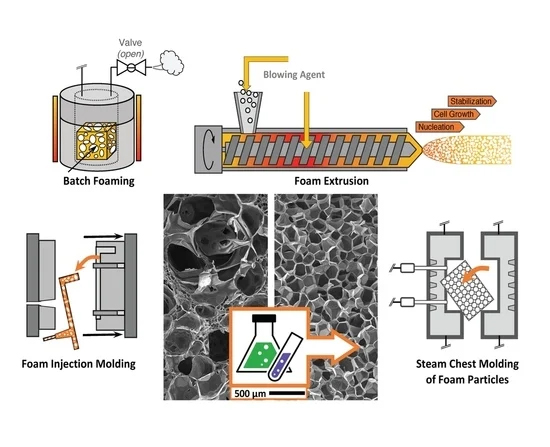 Chemical Foaming Applications in Footwear
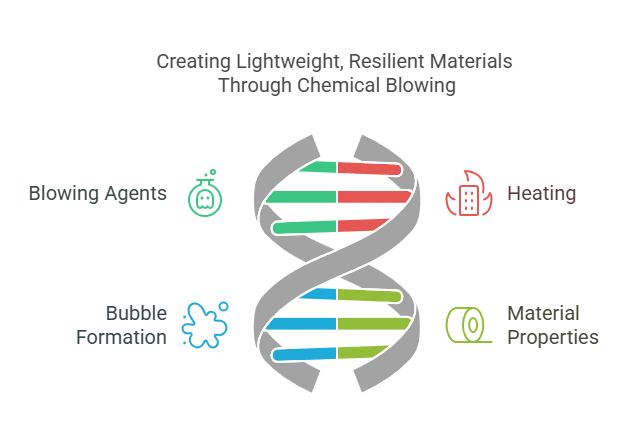
In simple terms, chemical blowing involves the use of blowing agents, which are chemicals that release gas when subjected to heat or a chemical reaction. These agents are typically incorporated into the material during the production phase. When the material is heated, the chemical blowing agents decompose, releasing gas, which forms bubbles within the material. This process creates a foamy structure, resulting in a material that is both lightweight and resilient. The size and distribution of the bubbles can be controlled to achieve specific properties such as density, elasticity, and cushioning.
In the context of footwear, chemical blowing is most commonly applied to the creation of foam soles and midsoles, materials essential to the comfort and support of shoes. The foam created by the chemical blowing process is not only lightweight but also offers superior shock absorption, making it an ideal material for athletic shoes and everyday footwear. Additionally, it can improve the thermal insulation of shoes, helping to maintain foot comfort in various weather conditions.
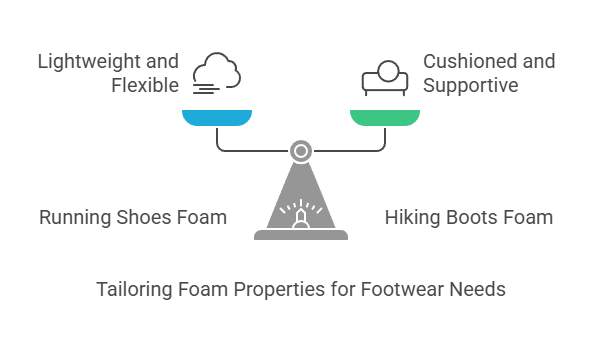
A key advantage of chemical blowing in the footwear industry is the ability to produce foam with specific properties tailored to the requirements of different types of footwear. For example, running shoes benefit from foam that is not only lightweight but also offers flexibility and durability. On the other hand, hiking boots require foam that provides additional cushioning and support while maintaining structural integrity over long distances and rugged terrain.
Another significant benefit of chemical blowing is its ability to optimize the cost-effectiveness of footwear production. The process reduces the amount of material needed in shoe construction without compromising the strength or quality of the final product. This reduction in material usage can lead to more efficient manufacturing and lower overall production costs, making the footwear more affordable for consumers while still maintaining high performance.
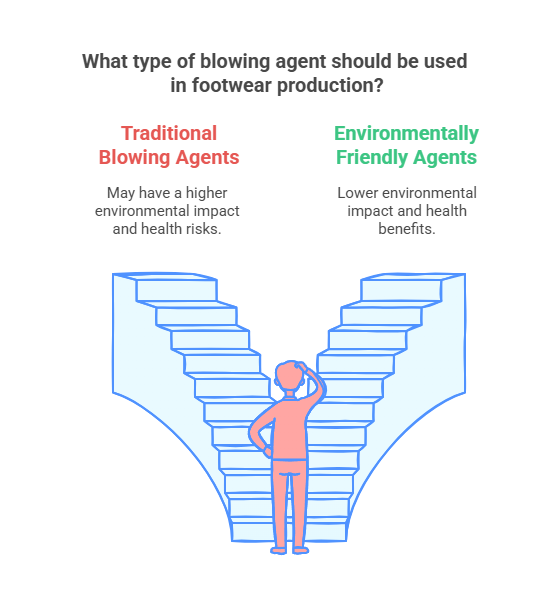
However, it is important to note that the type of blowing agent used in the process can impact both the environmental footprint and the health and safety of the people during the manufacturing process. In recent years, the footwear industry has shifted towards using more environmentally friendly blowing agents that have a lower impact on the ozone layer and the environment. Advances in technology have led to the development of non-toxic and biodegradable blowing agents, which contribute to the growing trend of sustainable footwear production.
In conclusion, chemical blowing has long been a key process in the footwear industry, providing lightweight, durable, and comfortable materials essential for various types of shoes. Through the careful selection of chemical blowing agents and a controlled manufacturing process, the industry has improved the performance and affordability of footwear while addressing environmental concerns. However, as sustainability becomes a growing priority, the industry is increasingly implementing physical foaming as an alternative. This eco-friendlier approach reduces reliance on chemical blowing agents and minimizes environmental impact. Over time, physical foaming is expected to gradually replace chemical blowing in many applications, marking a significant shift toward more sustainable footwear production while maintaining high-quality performance.